
Part 3: From Launch to Decline: How Market Research Maps the Right Strategy for Every Product Stage
From launch to decline, every product faces unique challenges. Learn how market research strategy uncovers insights that drive awareness, growth, loyalty, and renewal.
Boon Han Soon
10/23/20255 min read
The Real Question Isn't "What Works," It's "What Works Now"
If you've followed Parts 1 and Part 2, you now understand that brand growth comes down to three levers; penetration, usage, and value ... and market research is the engine that helps you decide where to push.
But here's the truth many marketers overlook: what drives growth for a new brand won't work for a mature one, and what saves a declining product isn't more advertising, it's smarter decision-making.
That's where market research earns its seat at the strategy table. Financial reports may tell you what happened, it is market research that reveals what's next, and more importantly, where to push for the highest impact.
Every Brand Has a Lifecycle and Research Reveals Where You Are
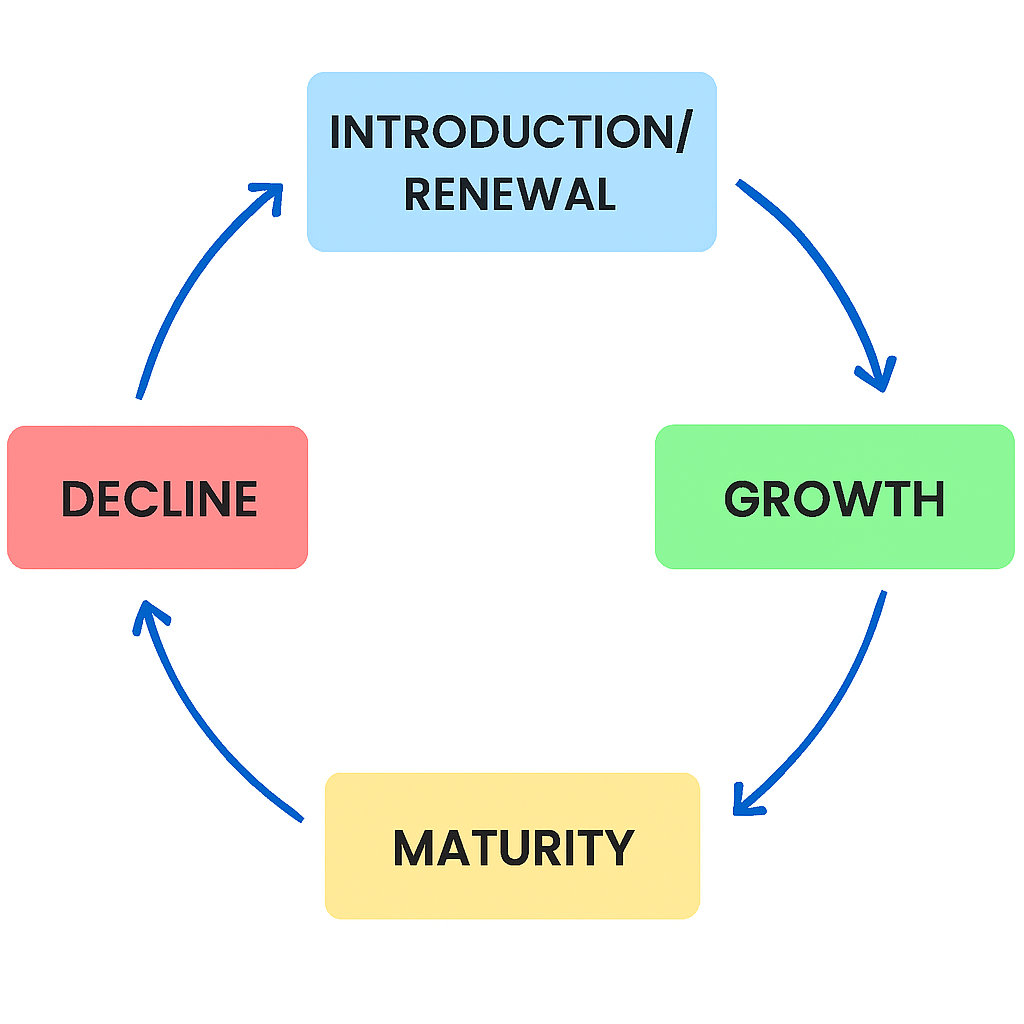
Whether you're selling ice cream, skincare, or SaaS, every brand passes through the same stages: introduction, growth, maturity, and decline. The challenge isn't the cycle itself, it's knowing which stage you're in, and acting accordingly.
Market research helps decode this. From tracking awareness and penetration trends to understanding usage frequency and value perception, research offers signals to diagnose your brand's true lifecycle position.
Table: How Each Stage Looks in Market Research Terms
How Market Research Diagnoses Lifecycle Stage
A classic mistake marketers make is assuming "growth" just because sales are rising. But topline volume doesn't always mean you're still acquiring new buyers. Sometimes you're just selling more to the same people.
Market research brings that clarity.
Brand tracking shows if penetration is still expanding or plateauing.
Usage & Attitude (U&A) studies reveal whether frequency or consumption occasions are growing.
Pricing research tests if consumers still perceive fair value or are trading down.
Category trend reports detect early signals of decline ... like consumers shifting to substitutes.
If awareness grows but conversion doesn't, you're stuck in late introduction.
If penetration flattens but frequency rises, you're entering maturity.
If even loyal users begin dropping off, decline has already started.
Stage-by-Stage - Which Growth Lever to Push and How Research Guides It
Stage 1 - Introduction: Build Awareness and Trial (Penetration)
At launch, your biggest barrier isn't competition, it's invisibility. Consumers don't yet know who you are or why they should care.
Strategy: Focus on building awareness and trial. Forget loyalty programs for now - you're still building your base.
Market Research Role:
Concept testing validates if your message and visuals land before you go to market.
Awareness tracking measures salience and reach effectiveness.
Trial diagnostics uncover barriers like price, availability, or trust.
Example:
Sunquick, when launching its new Mango flavor cordial, faced low awareness and a cluttered beverage kiosk scene packed with established brands. Research revealed that many consumers decided what cordial to buy before even entering the grocery store, meaning in-store promos were already competing in lost ground. To cut through the noise, Sunquick partnered with GrabAds to deliver 10,000 free samples digitally, targeting habitual grocery shoppers via app banners placed during key, low-distraction moments (e.g. while waiting for ride or food). The campaign generated 1.5 million impressions and reached over 680,000 unique users, successfully raising awareness and driving trial among those who hadn't yet tasted the new flavor. It's a sharp illustration of how market research + clever channel selection = penetration in a noisy market.
Stage 2 - Growth: Scale Penetration, Build Usage
Your brand's catching on. Distribution is improving. Now it's about expanding reach while deepening engagement.
Strategy: Keep recruiting new buyers, but also build frequency through added usage occasions - like "post workout," "afternoon pick me up," or "on the go convenience."
Market Research Role:
Segmentation studies identify emerging customer clusters.
Usage & occasion research shows underutilized moments.
Equity tracking highlights the drivers behind your brand's growth.
Example:
For instance, market research revealed that ketchup consumption peaked at lunch and dinner but dropped sharply during breakfast. In-home observation uncovered a surprising behavior, many households already used ketchup with eggs, hash browns, or sausages, but didn't consciously associate it with breakfast. The barrier wasn't taste or fit, it was mental availability. Acting on this insight, Heinz launched "Breakfast Ketchup," positioning it as a natural addition to morning meals. The move reframed ketchup from a mealtime condiment to an all-day staple, expanding usage occasions and lifting purchase frequency. It's a clear case where uncovering real usage behavior turned a mature product into a growth engine.
Stage 3 - Maturity: Defend Loyalty, Grow Value
At this stage, your brand is well-known, but growth slows. Competitors crowd in, and customers become price-sensitive.
Strategy: Focus on increasing value per transaction and reinforcing emotional relevance. Premiumization and usage expansion are your key levers.
Market Research Role:
Share of wallet studies identify cross-buying patterns.
Price elasticity testing guides value-tier and pack-size strategies.
Loyalty tracking reveals what sustains repeat behavior - habit, convenience, or brand love.
Example:
For a while now, Carlsberg Malaysia has been facing a maturing, saturated beer market. Growth was slowing, and volume had plateaued. However, all is not lost. Research revealed a shift in consumer preference: more drinkers were trading up, seeking quality and experience over quantity. Acting on this insight, Carlsberg launched its "Accelerate Premiumization" strategy, focusing on premium brands like 1664 Blanc and Connor's. Instead of chasing volume, they grew value, attracting consumers willing to pay more for better taste and image. The move paid off. Despite softer volume sales, Carlsberg delivered profit growth, proving that understanding evolving consumer aspirations can unlock growth even in stagnant markets.
Stage 4 - Decline: Optimize, Reinvent, or Renew
When decline sets in, pushing harder rarely saves the brand - it often speeds the fall. This is the stage for pruning, focusing, and reinventing.
Strategy: Simplify SKUs, protect margins, and look for innovation opportunities aligned with brand equity.
Market Research Role:
Category evolution studies reveal whether decline is brand-specific or structural.
Concept testing finds adjacent opportunities where your brand still has credibility.
Portfolio analytics guide SKU rationalization.
Example:
A few years ago, Malaysia Airlines was facing steep decline. Once a national pride, it had become associated with legacy inefficiencies and rising competition from low-cost carriers. Growth had stagnated, and brand relevance among younger travelers eroded. However, research revealed an underserved segment; travelers who still valued comfort, reliability, and a premium flying experience, especially for regional and long-haul routes.
Instead of chasing volume in price-sensitive markets, the airline reinvented itself by refocusing on service excellence and premium positioning. Fleet renewal, better cabin experience, and refined route strategies all aligned with what these travelers truly wanted, a seamless, quality journey rather than the cheapest fare.
The results followed. By tapping into a segment overlooked in the rush toward low-cost travel, Malaysia Airlines returned to profitability and regained trust among discerning passengers. It was a renewal rooted not in nostalgia, but in understanding evolving aspirations, proving that even legacy brands can rise again with the right insights and reinvention.
Recognizing When It's Time to Shift Levers
No lifecycle stage lasts forever. The smartest brands adapt early. Market research offers the earliest warning signs of change.
Emotional detachment in brand tracking ("just another brand") often signals decline months before sales data does. Research helps you see it before the curve drops.
The Real Role of Market Research Across the Lifecycle
When used strategically, market research isn't just an observer - it's your compass. It ensures every marketing dollar aligns with your brand's true stage of growth.
Lifecycle Role Summary Table
Lifecycle Stage Strategic Role of Research Introduction Validate positioning, measure awareness gaps Growth Find new audiences and underused occasions Maturity Protect loyalty, optimize pricing, reinforce value Decline Diagnose category shifts, guide innovation
Final Thought: Growth Isn't Linear, and Neither Is Strategy
Your brand's job is to grow.
Your market research's job is to show where and how.
Each growth lever - penetration, usage, and value - can fuel success, but only if it matches your brand's reality. That reality is always moving, and research keeps you synced to it.
Before your next big decision, ask your data one simple question:
"Where is my brand in its life right now - and what's the smartest move from here?"
That's how insight-driven marketing becomes true growth-driven leadership
✅ Articles in the series:
👉 Part 1: The Hidden Formula Behind Every Growing Brand (and Why Most Marketers Miss It)
👉 Part 2: How Market Research Powers Real Brand Growth - Beyond Just Insights and Reports
Subscribe to our newsletter
Keep up with the latest in Consumer Insights as we explore new trends, tools, and discoveries transforming how we understand consumers.
Connect
© 2025. All rights reserved.